

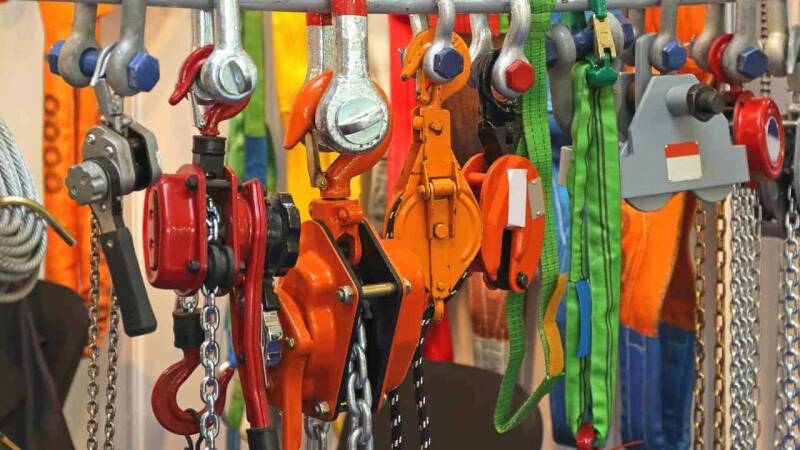
A thorough examination of lifting accessories is one of the most critical legal requirements under the Lifting Operations and Lifting Equipment Regulations 1998 (LOLER). Accessories such as slings, chains, shackles, hooks, eyebolts, and spreader beams are exposed to constant wear, environmental damage, and loading cycles. Because of this, they fail far more frequently than lifting machines themselves. When they fail, the consequences can be severe.
This blog explains what a thorough examination involves, what the statutory report must contain, common defect types, and how Alpha Health & Safety Training Solutions supports businesses with fully compliant, audit‑ready LOLER examinations.
🔍 What Is a Thorough Examination?
A thorough examination is a statutory inspection carried out by a competent person. It is not a quick visual check or a maintenance service. Instead, it is a detailed assessment of the accessory’s safety‑critical components, supported by testing where required.
A thorough examination must:
-
Be systematic and detailed
-
Be carried out by a competent person with the right knowledge and independence
-
Result in a written Schedule 1 Report of Thorough Examination
-
Identify defects and categorise them appropriately
-
Trigger immediate action if a serious defect is found
📅 LOLER Examination Intervals
Under LOLER Regulation 9, lifting accessories must be examined:
-
Every 6 months
-
Before first use, if installation affects safety
-
After exceptional circumstances, such as overload, damage, or long periods out of service
These intervals are mandatory and form part of a company’s legal duty to maintain safe lifting operations.
🧾 What the Report Must Include
The Schedule 1 report is the legal document proving the accessory is safe to use. It must include:
-
Unique ID and description of the accessory
-
SWL/WLL and manufacturer details
-
Date of examination and next due date
-
Defects found and their category
-
Required actions and timescales
-
Examiner’s name, signature, and organisation
This report must be retained and made available to inspectors, insurers, and auditors.
⚠️ Defect Categories
LOLER defect categories determine what action must be taken:
-
Category A – Serious Defect: Immediate danger. Equipment must be removed from service immediately.
-
Category B – Significant Defect: Not immediately dangerous but must be rectified within a defined timescale.
-
Category C – Observation: Advisory notes or minor issues. No immediate action required.
🔧 What Examiners Check
Different accessories fail in different ways. A competent person checks for:
-
Chain slings – wear, elongation, cracks, corrosion
-
Wire rope slings – broken wires, crushing, ferrule condition
-
Webbing slings – cuts, abrasion, UV damage, chemical attack
-
Roundslings – cover integrity, core condition
-
Shackles – deformation, pin wear, thread condition
-
Eyebolts – cracking, thread damage, seating
-
Hooks – throat opening, deformation, safety catch function
-
Spreader beams – structural condition, pins, clevises, markings
🏢 How Alpha Health & Safety Training Solutions Supports You
We provide a complete LOLER compliance service for lifting accessories, including:
✔️ Competent Person Examinations
Carried out in accordance with LOLER Regulation 9 and industry best practice.
✔️ Full Schedule 1 Reports
Clear, compliant, and audit‑ready documentation with photographic evidence where required.
✔️ Defect Management
Immediate escalation of Category A defects and structured corrective actions for Category B defects.
✔️ Asset Registers
We create or update lifting accessory registers to ensure traceability and correct examination intervals.
✔️ Operator Awareness Training
Toolbox talks and practical training to help reduce accessory failures between examinations.
✔️ Integration with Your Safety Systems
Reports can be embedded into RAMS, audit packs, and digital safety systems.
📌 Why Thorough Examination Matters
Lifting accessories are the most common point of failure in lifting operations. A missed defect can lead to dropped loads, serious injury, or enforcement action. Thorough examinations provide independent verification that equipment is safe, compliant, and fit for purpose.
📞 Need Support?
Alpha Health & Safety Training Solutions provides reliable, competent, and audit‑ready LOLER examinations across all lifting accessories. Contact us today to schedule your next thorough examination.
Add comment
Comments